Introduction
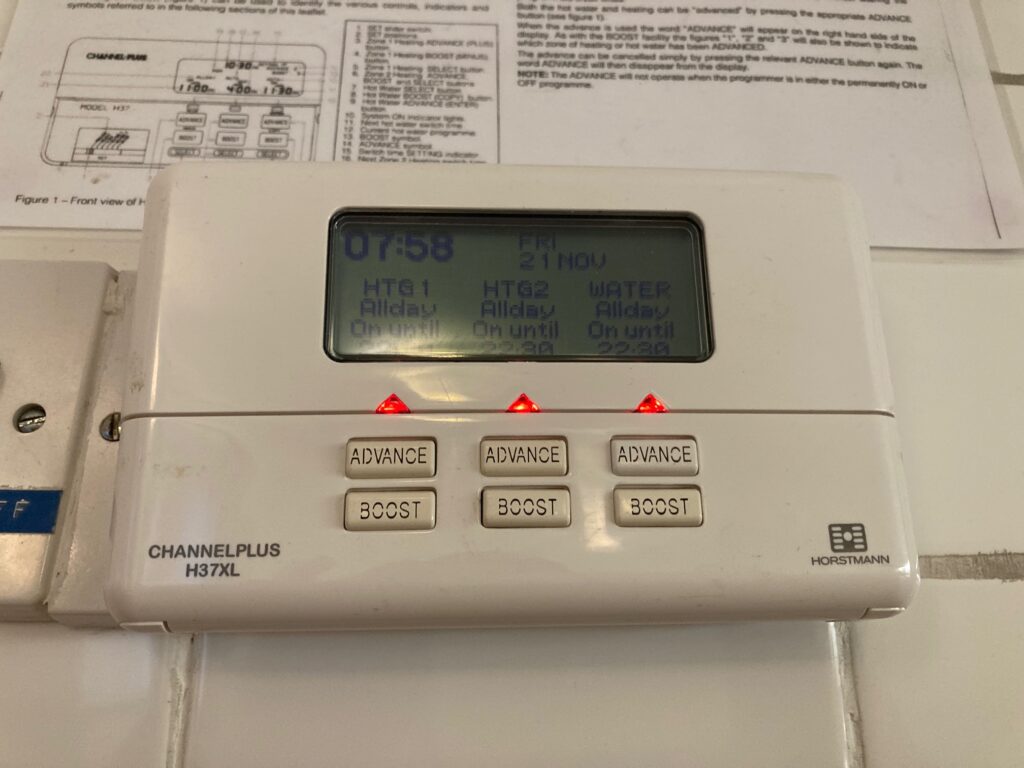
This is a project to replace a standard heating controller (Horstmann H37XL) with the HIVE smart heating control system.
We have an oil-fired boiler connected to a hot water tank, servicing two heating zones. The radiator system is open-vented, and motorised valves are controlled by the heating system.
Limited information could be found on the internet for this specific use case, therefore, I capture my experience here for reference. The key benefits for this upgrade are:
- support for remote heating control, and,
- a lower heating bill.. hopefully.
CAUTION: This blog documents the steps taken by a curious DIYer and may not be suitable for your use case. Electrical installations can be dangerous. Seek help from a professional electrician or plumber if you are at all unsure.
Background
- User Request: The user adjusts the thermostat to request heat, signalling the control system to initiate the heating process.
- Motorised Valve Operation: The heating control system activates the motorised valves associated with the relevant heating zones, allowing water to flow into the radiators.
- Pressure Drop: As the motorised valves open, the flow of water changes. In an open-vented system, this can lead to a decrease in overall system pressure.
- Pump Activation: The pressure drop, along with the demand for heat, triggers the pump to start circulating water through the system.
- Boiler Ignition: The pump activation signals the oil-fired boiler to ignite and heat the water, ensuring that the warm water reaches the opened radiators and provides the requested heat.
Before
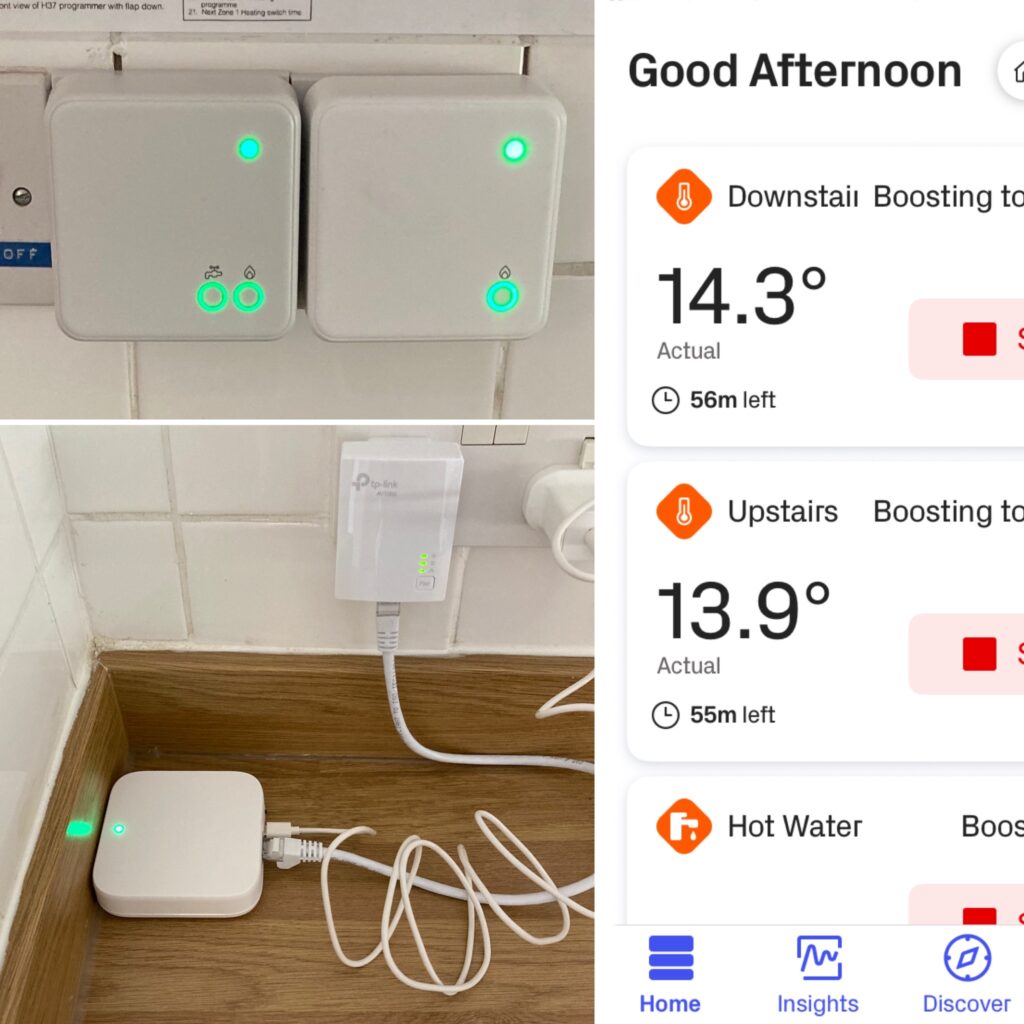
After
Ingredients
- HIVE Thermostat Mini for Heating Control & Hot Water with Nano 3 Hub
- HIVE Thermostat Mini for Heating Control Multizone (Hubless)
- Blank Plate 1 Gang * 2
- Twin & Earth Cable (6242Y) 1.5mm Coil
- WAGO 221 Compact Lever Connectors (2, 3 & 5-way)
- TP-Link TL-PA717 1-Port Gigabit Powerline Kit.
Process
Switch off the heating system at the isolation switch (left of existing controller), remove the controller and reveal the wiring plate. Check there is no voltage across the wires using my Fluke 1AC-II voltage tester. Safety first!
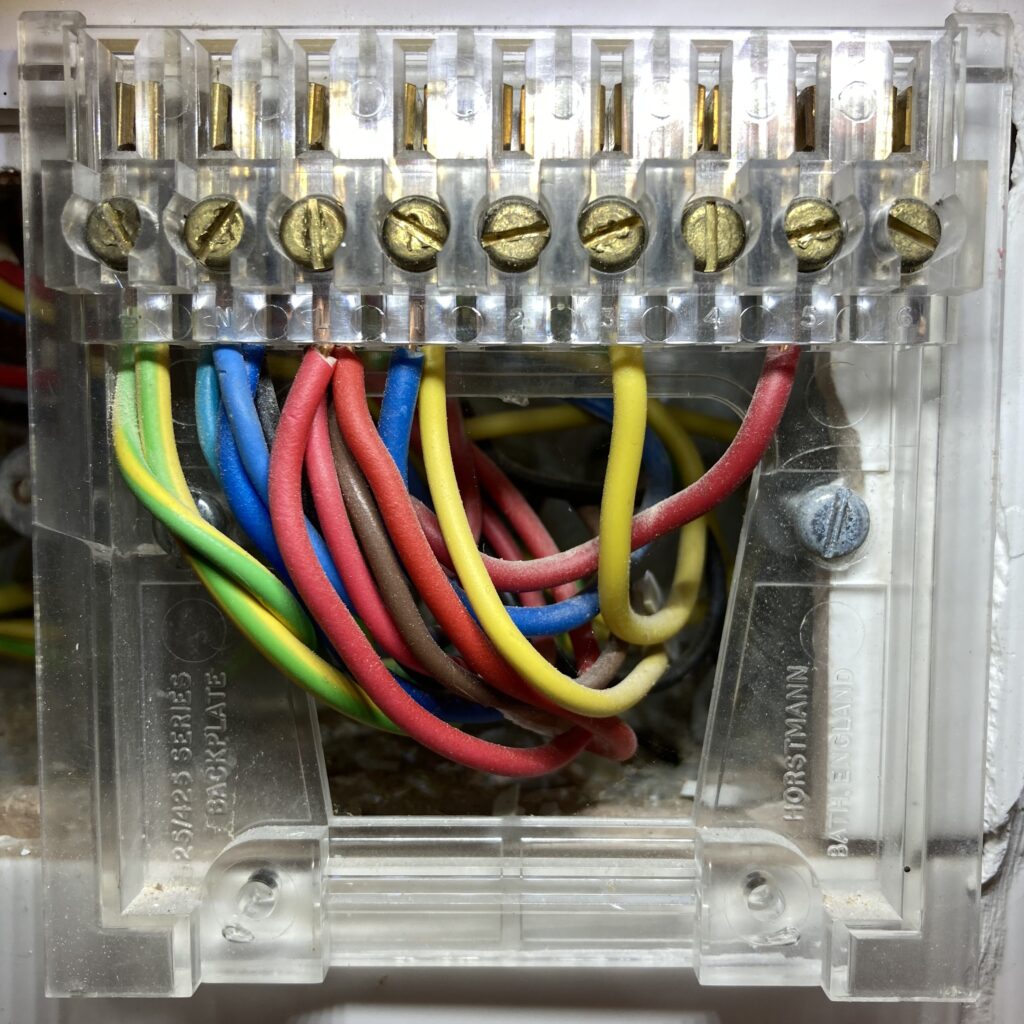
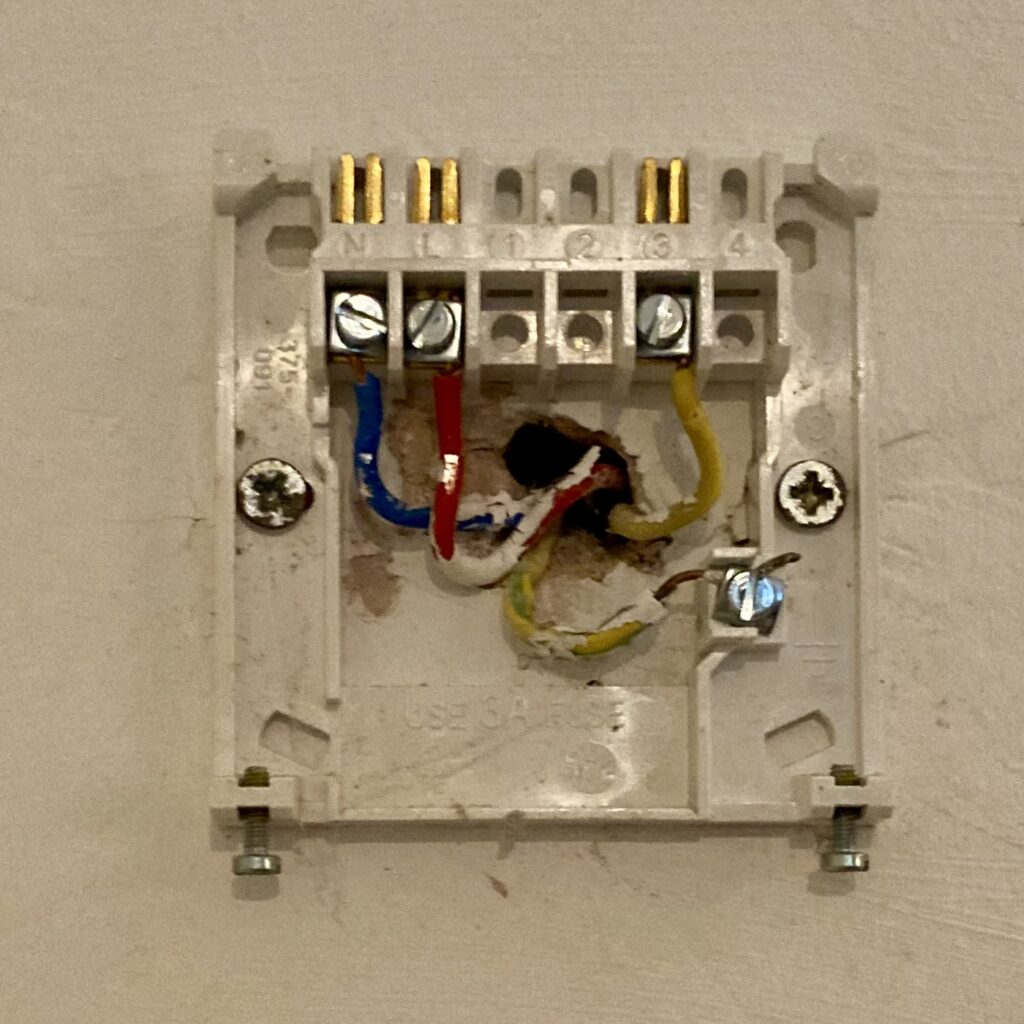
Current Setup
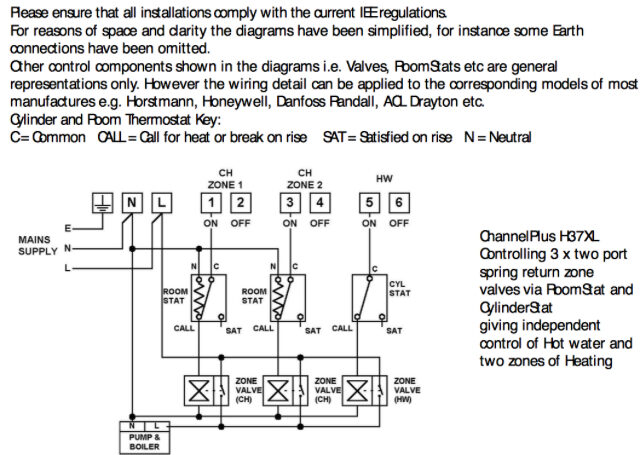
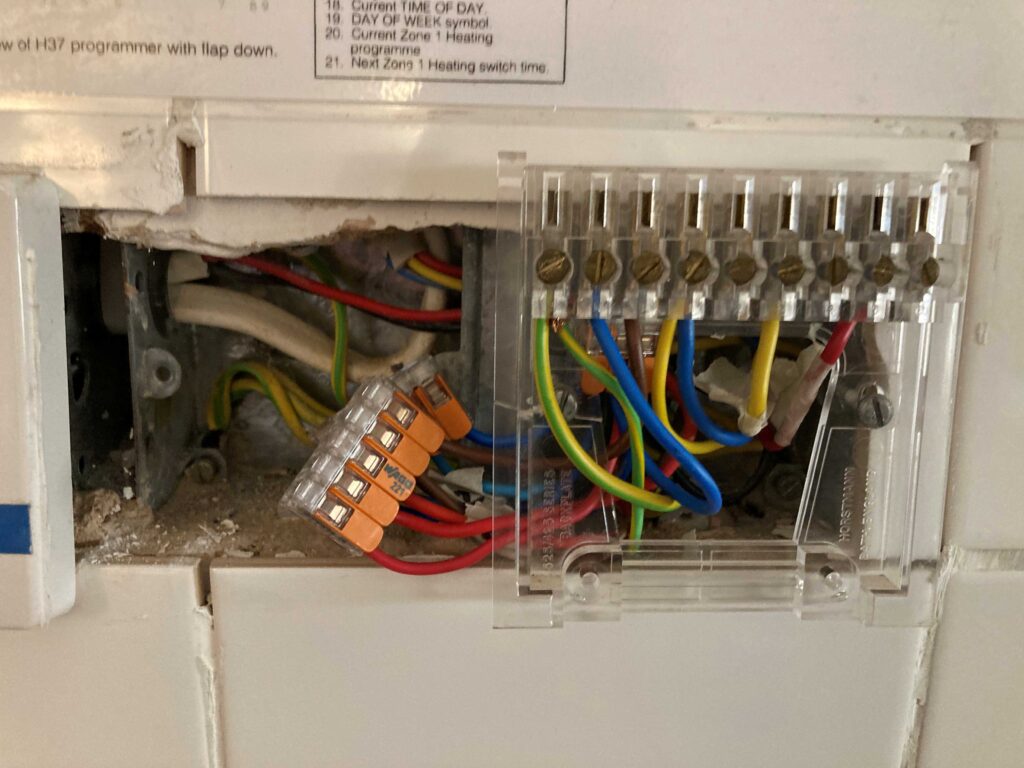
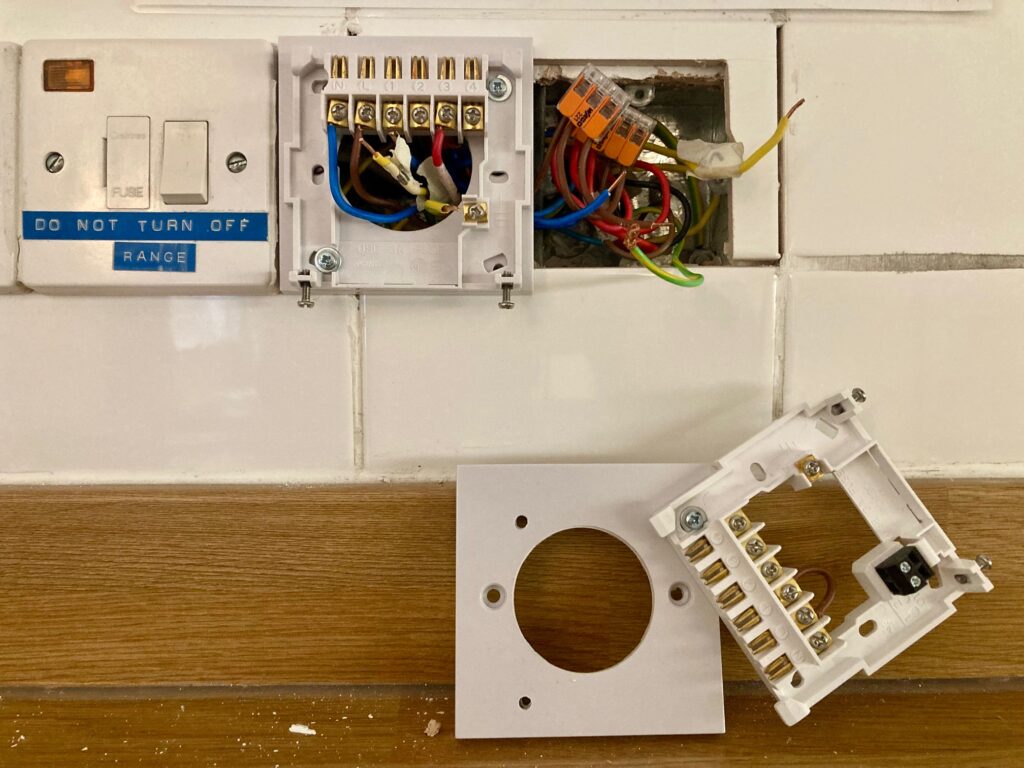
To make sense of the wires, I search for wiring diagrams and used ChatGPT to validate any conclusions. We have from left to right:
- 2 earth wires sharing the same connection (yellow/green)
- Then, 4 neutral wires (3 blue and a single black)
- Then, 4 live wires (3 red and a single brown)
- Then, 2 wires (blue and yellow) in switched live terminal L1
- Then, 1 wire (yellow) in switched live terminal L3
- Finally, 1 wire (red) in switched live terminal L5
Interpretation
The mix of wire colours causes confusion, plus the two wires on L1 did not make sense. ChatGPT was helpful, though it became fixated on a ‘standard’ implementation which was inconsistent with the wiring diagram below. Eventually, this is what I surmised:
- It is quite common for plumbers to use non-standard wiring colours. Great!
- There is an existing, wired frost prevention thermostat. This will bypass the controller and switch the heating on automatically if the room temperature drops too low.
- Therefore, the additional switched live wire in terminal L1 is likely to come from the frost prevention thermostat. I plan to keep this in the new system since it monitors the temperature in another downstairs room.
- The wiring diagram below suggests we have central heating zone 1 (CH1), central heating zone 2 (CH2) and hot water (HW) in terminals L1, L3 and L5 respectively.
Simplify the Wiring
The next step was to label and simplify the wiring. At this point it was not certain that the HIVE system would work as intended, therefore it was important to be able to reverse any changes and call a professional, if needed!
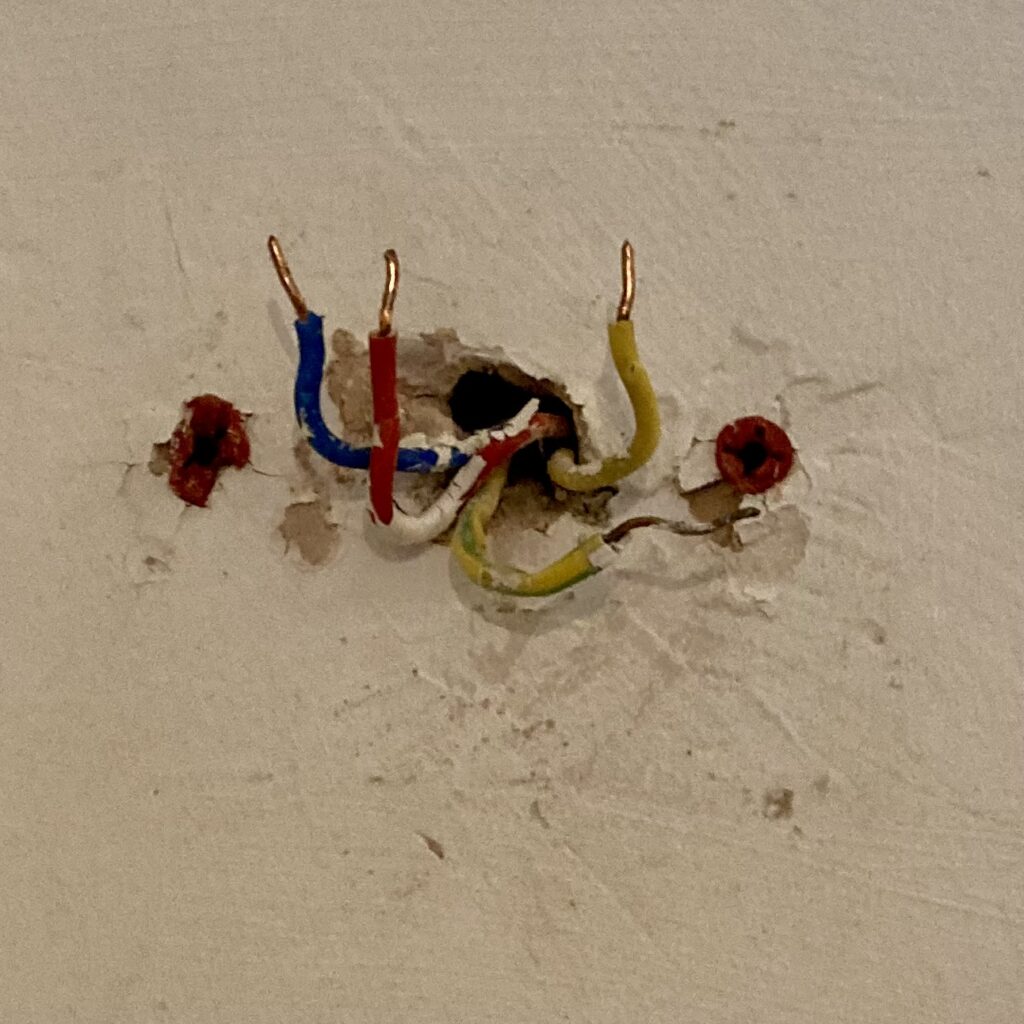
The following picture shows: a) the switched wires labelled with masking tape, and b) WAGO connectors added to reduce the number of wires required for the existing backplate.
Test Run
An initial test run of the dual zone HIVE receiver (HW + CH1) is performed.
CH1 – central heating zone 1 could not be started from the boost button. This was resolved by remembering that the existing room thermostat needs to be on maximum to ensure this is not overriding the HIVE thermostat.
HW – in addition, the hot water boost did not start up. The light came on but the boiler did not fire up.
I stopped the test run and re-installed the original controller. Subsequently, I believe that the hot water was already above the target temperature in the hot water tank. I could have run the hot water tap at the kitchen sink to lower the temperature and trigger the boiler to fire up.
The test run results were sufficiently encouraging to continue onto the next step of the project.
Mounting the HIVE receivers
Significant time was spent working out how to mount both HIVE receivers neatly to the wall in the same space as the existing controller. Once I had identified that the existing backboxes were two adjacent singles* then I focussed on how to mount the HIVE back plates to the 1-gang, blank plates.
*Initially I assumed a 2-gang, blank plate would work. It transpires that a 2-gang plate is not the same width as two 1-gang plates!
The correct 1-gang blank plates were purchased. I test fit the two receivers side-by-side to find that they cannot fit within each plate. So, the receivers are mounted flush to the left side ensuring the adjacent switch can be accessed in the future. I mark areas for cutting & drilling using masking tape.
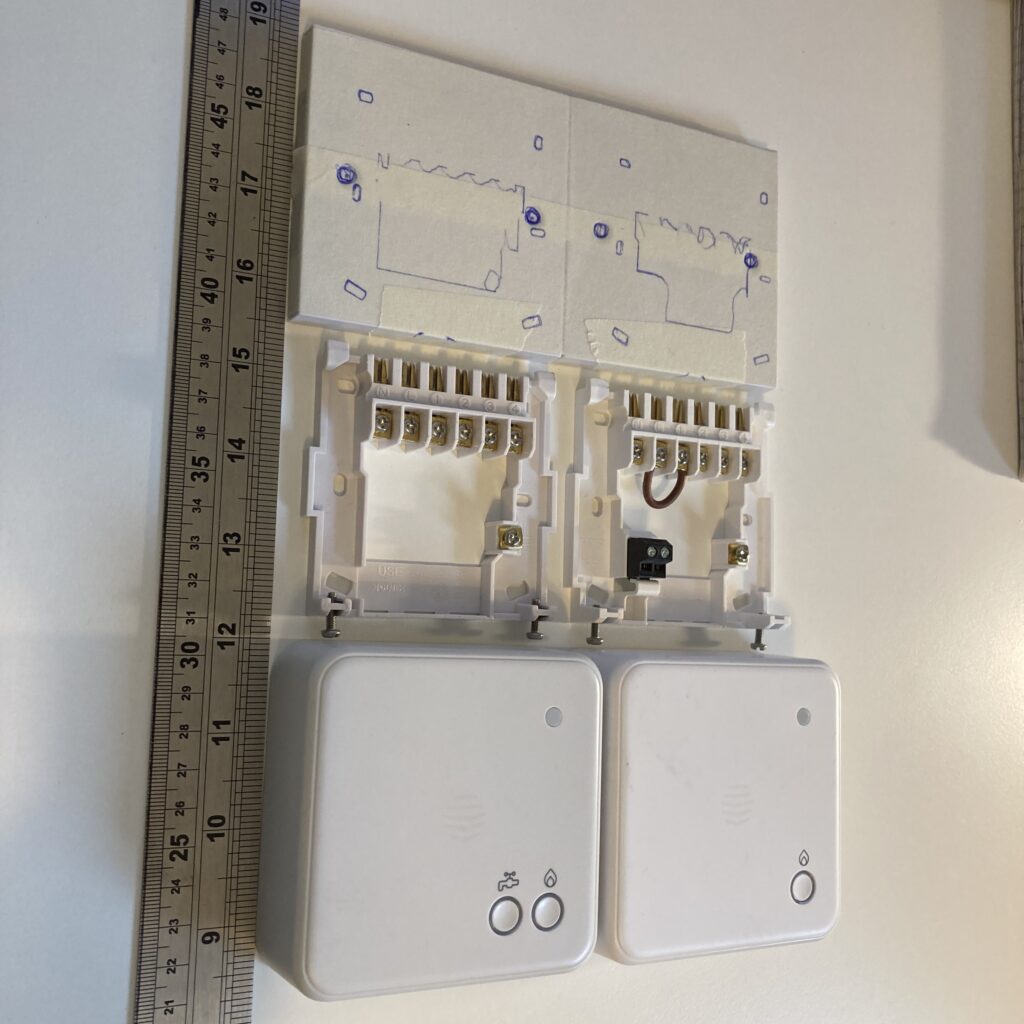
The central holes are cut first. Then, holes for the mounting screws are drilled. One of the blank plate cracks under the pressure. A more gentle technique is applied the next time round.
A test fit identifies that the HIVE back plate must be fitted after each blanking plate has been screwed to the wall. This is because the HIVE back plate masks the holes that secure the blanking plate to the wall. In addition, I did not want to drill through the HIVE back plate to expose these holes in case this weakened it. Two challenges present themselves:
#1 The mounting bolts (sourced from my stash) for the HIVE back plate are very short at 12mm long. However, they need to be shorter to prevent the bolt from fouling the wall tiles where they sit close to the edge. The bolt is reduced to approximately 9mm by: threading three nuts to the top of the bolt; trapping the bolt in a mole grip; clamping the mole grip to my workbench; then using a hacksaw to cut 3mm off the end; the three bolts are then unscrewed to ensure the thread is reformed correctly following the cut. A lot of effort for a very small cut!
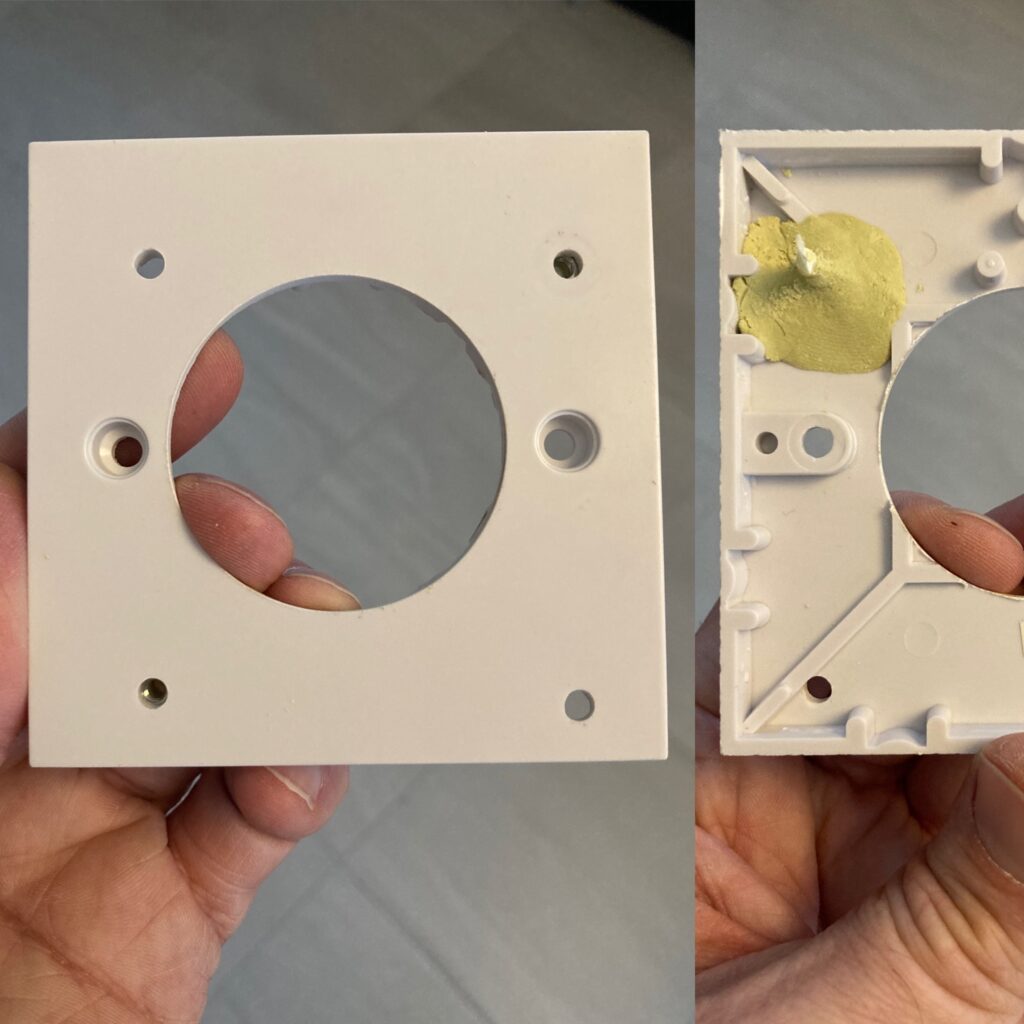
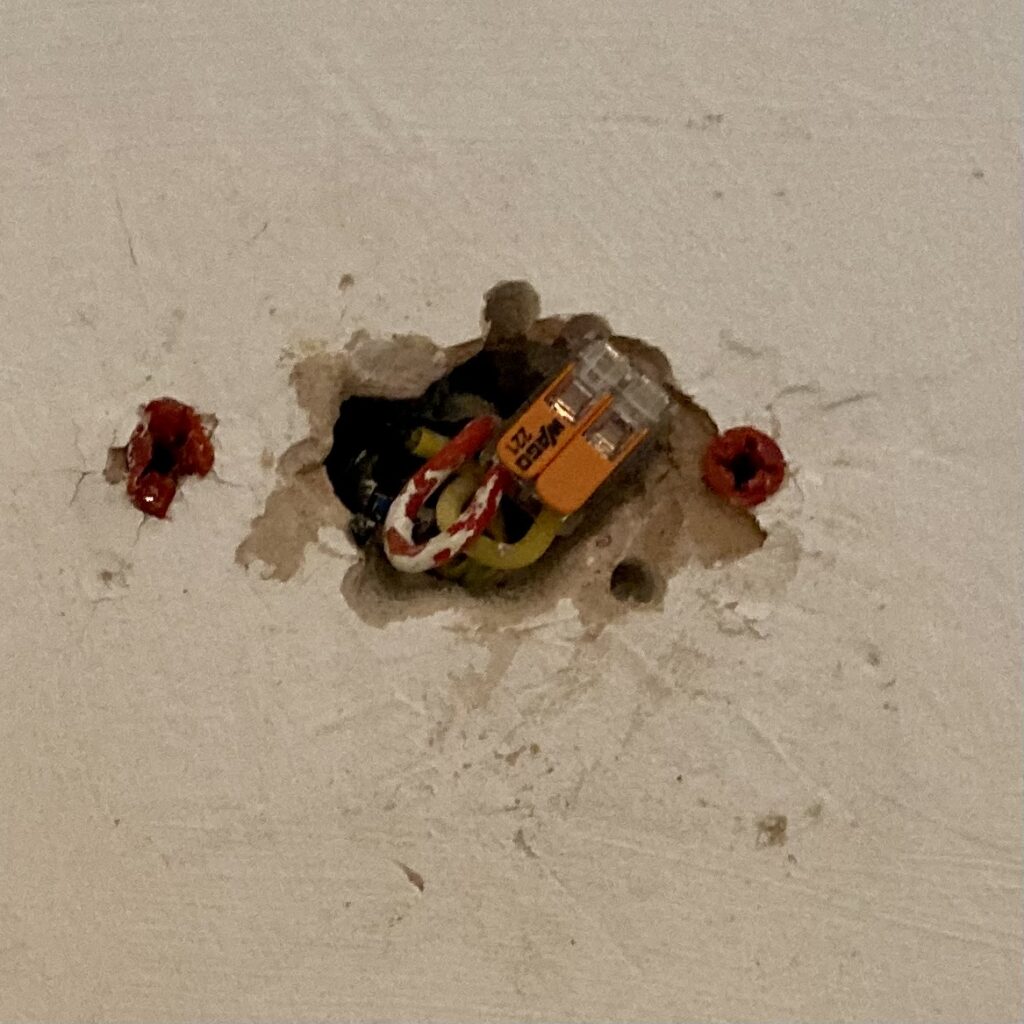
#2 The nut for the mounting bolt will be very difficult to access when the blank plate is affixed to the wall. I decide to form a captive nut by setting it in 2-part epoxy putty (Milliput) at the back of the plate. I chose this over super glue since it is difficult to prevent the glue spreading onto the thread of the nut. You will see the captive nuts in the bottom left and top right of the picture.
Final Steps
- Screw the blank plate to the wall
- Screw the HIVE back plate to the blank plate
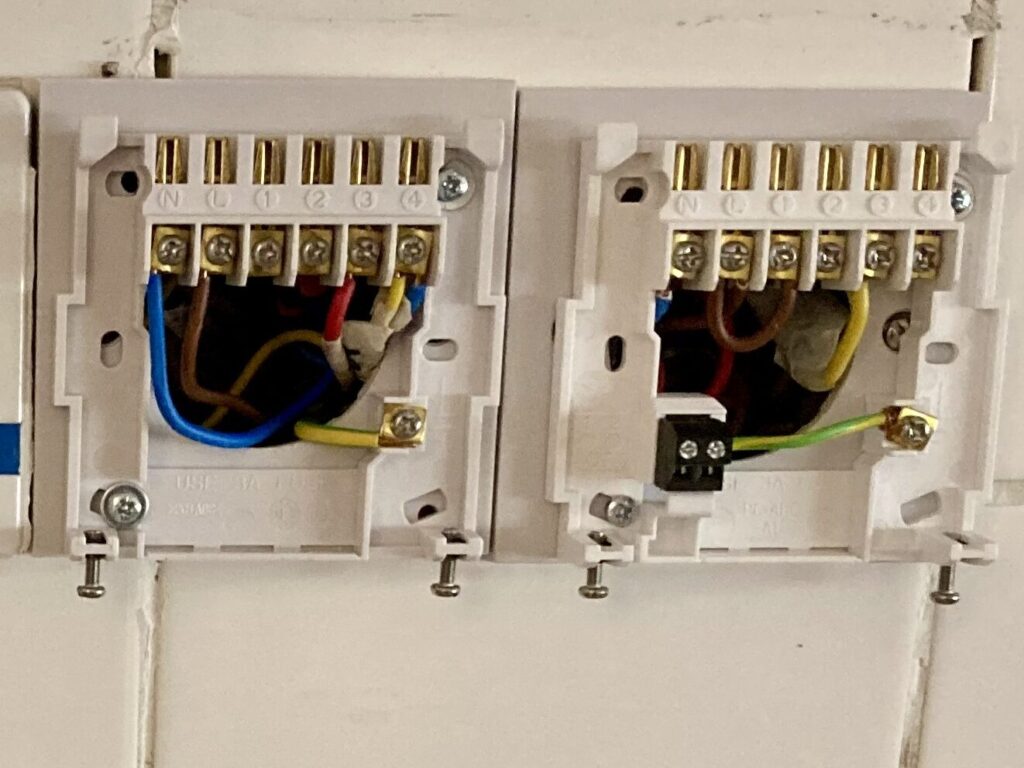
- Pull the wires through and attach to the correct terminals on the HIVE back plate
Terminal Mappings
| # | Zone Description | Horstmann H37XL | HIVE Receiver | HIVE Terminal |
| 1 | CH1 | L1 | Dual Zone | L4 |
| 2 | HW | L5 | Dual Zone | L3 |
| 3 | CH2 | L3 | Single Zone | L4 |
| 4 | Jumper cable | N/A | Single Zone | L to L1 |
- Switch the electricity on at the isolation switch
- Install the Powerline kit to ensure a reliable internet connection from the home router to the HIVE hub.
- Follow these instructions from HIVE to connect each receiver to their thermostat and the HIVE app.
Finishing Touches
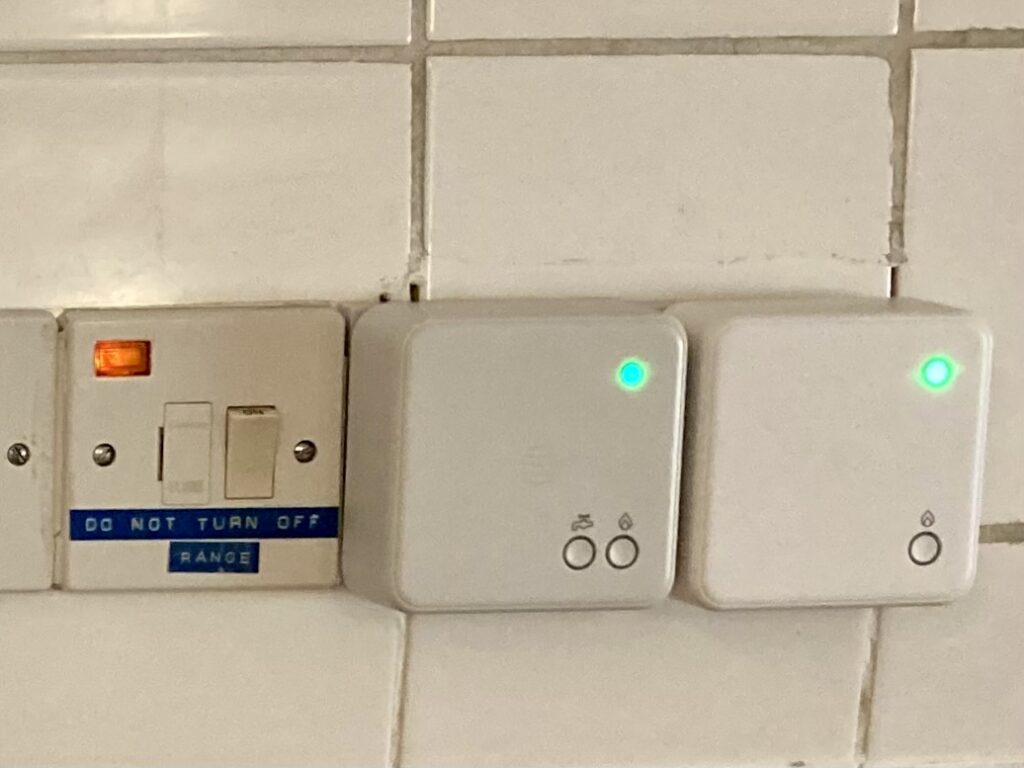
- Mount the HIVE hub on the wall and cable-tie the wires out of the way
- Close the circuit on the existing room thermostats, upstairs and downstairs
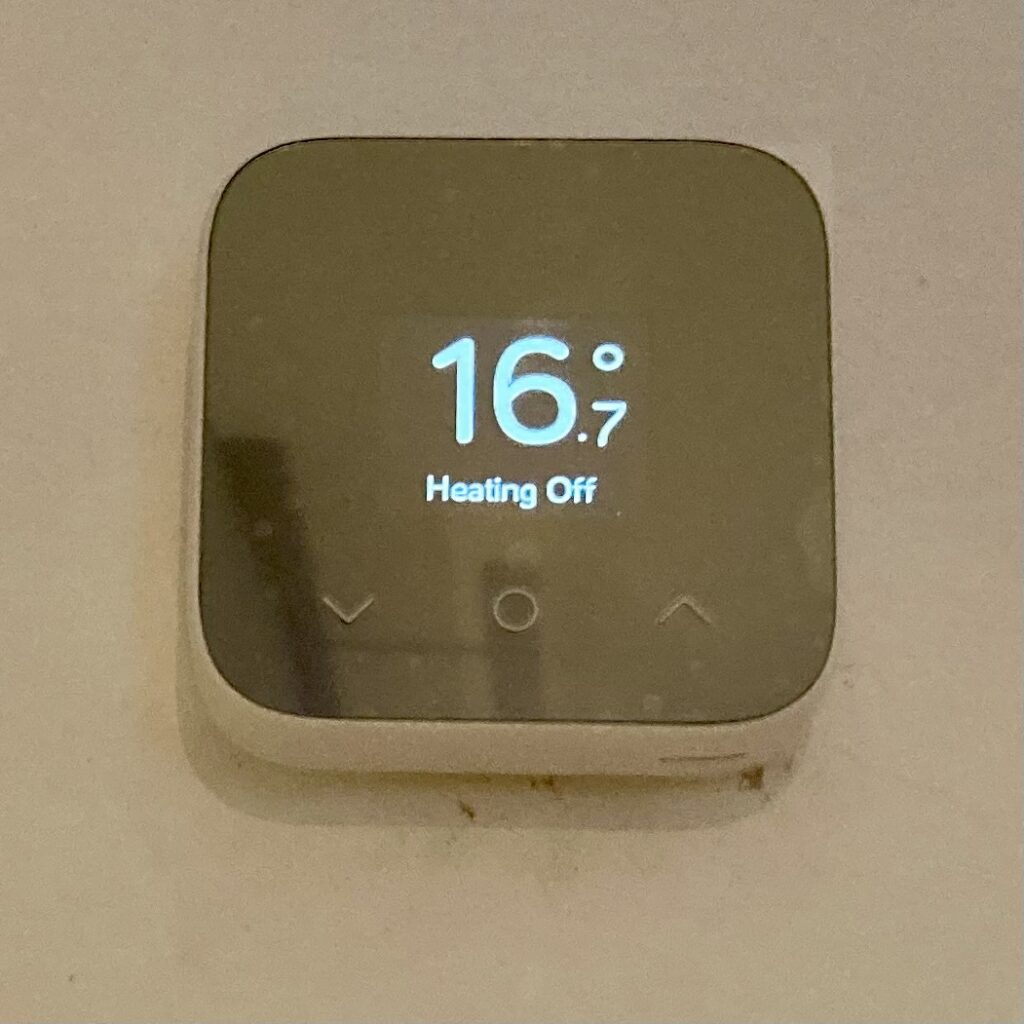
- Fix the new wireless thermostats to the wall in the same location
Final Steps
- Test the wired frost prevention thermostat
- Make a crib-sheet advising users how to operate the new HIVE Mini Multi-Zone heating system. Laminate and fix to the wall above the HIVE receivers.